There's High Country, Just Behind the Great Ocean Road
The Road from Forrest to Lorne
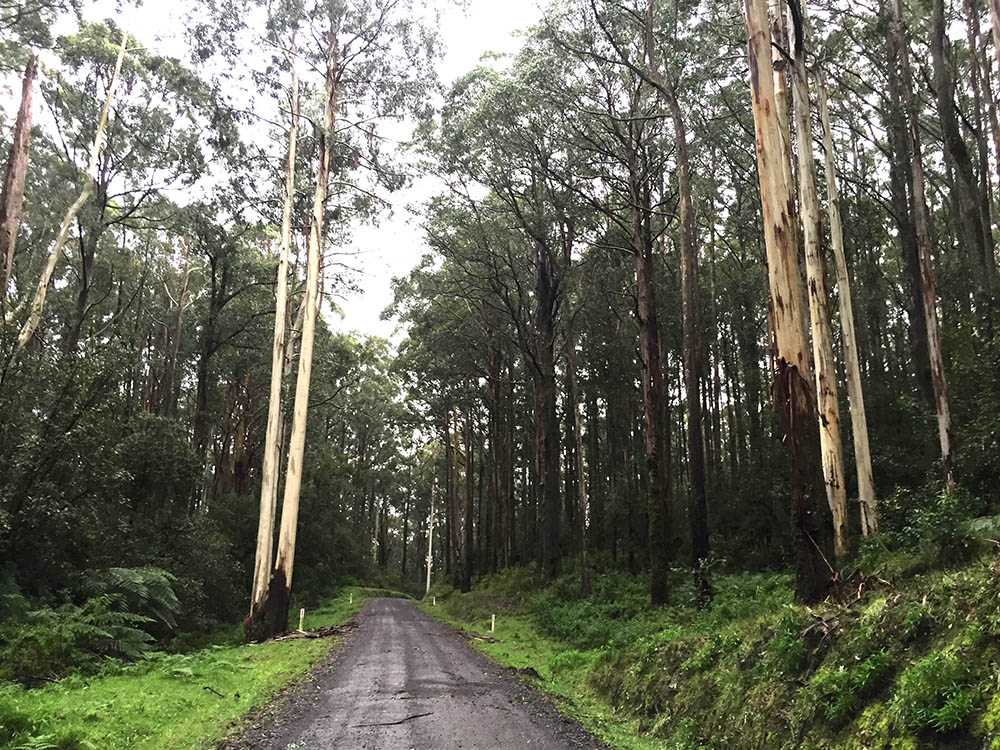
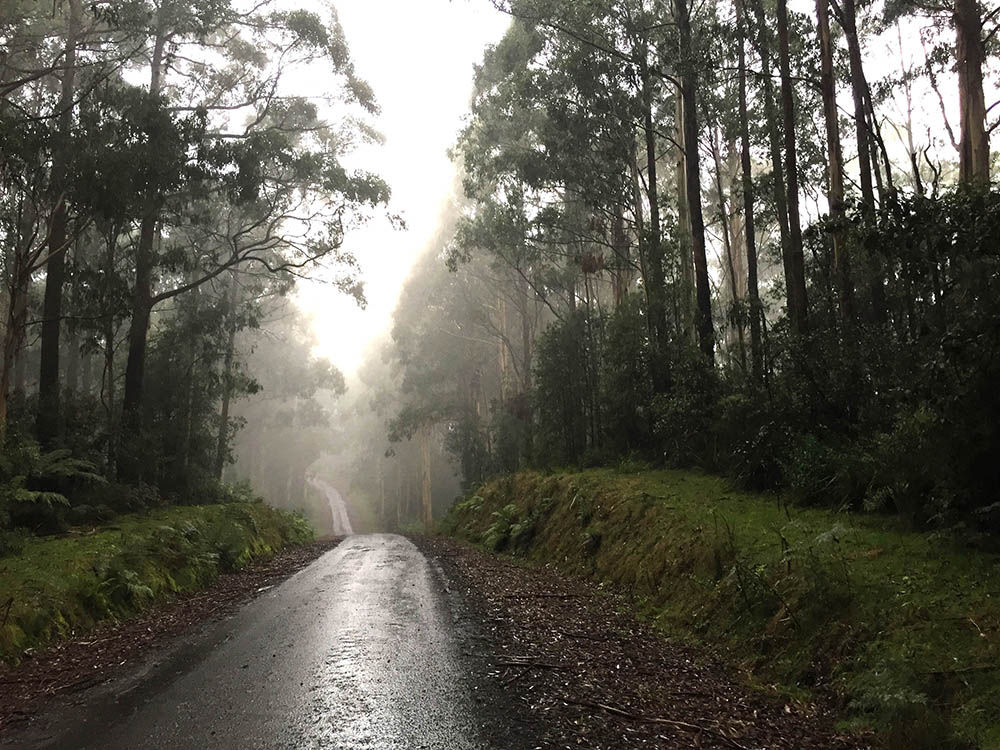
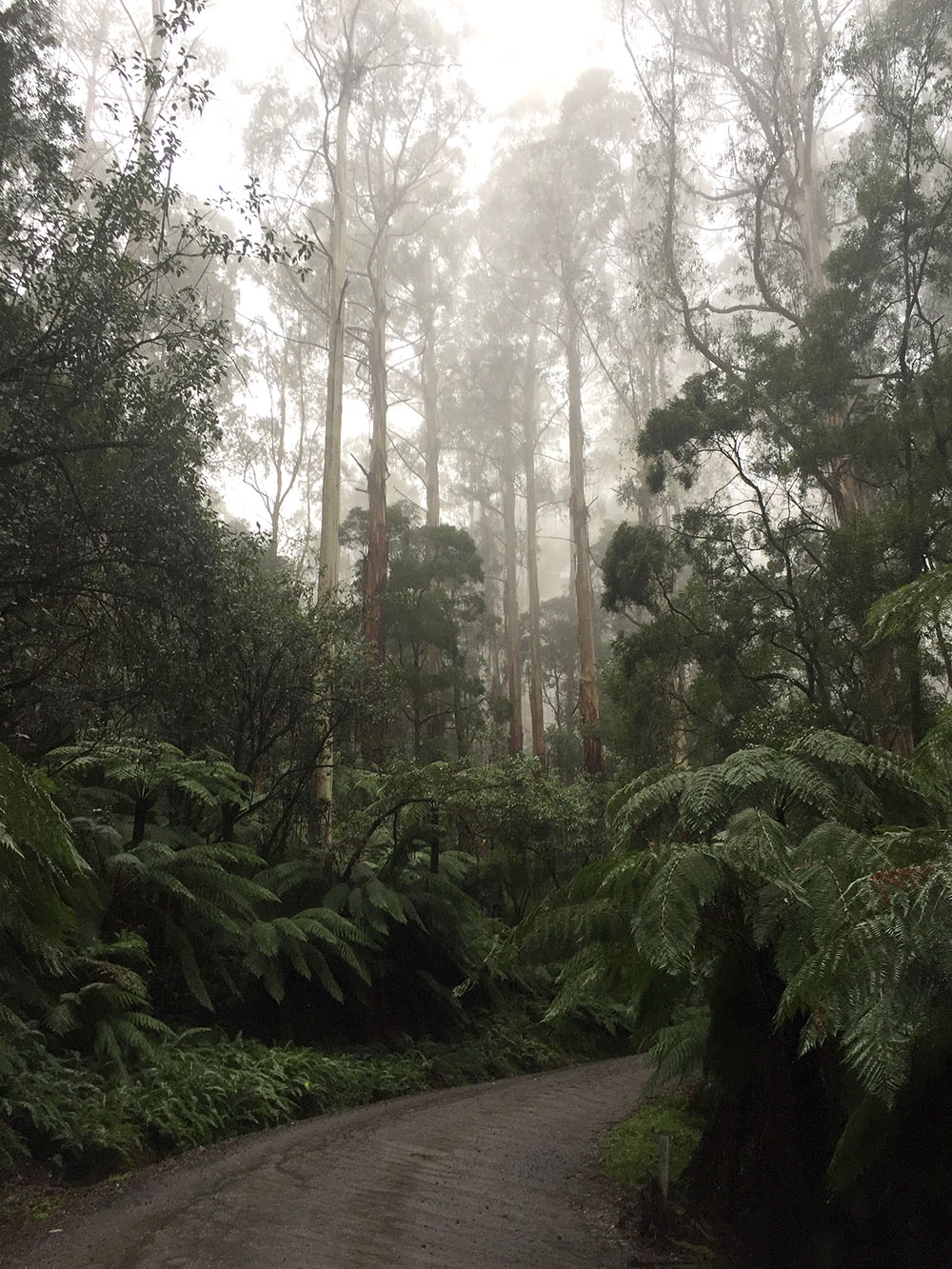
Mid-June. It had been raining for days, the kind of persistent, purposeful rain that the Otways seem to manufacture from scratch. I was up in Forrest fixing gutters and digging trenches to redirect water that had decided to go its own way. At that altitude, snow is not out of the question in a cold year. This week it was just mist; low, grey, and thoroughly committed. We live in Anglesea. The sensible route home from Forrest cuts inland past Deans Marsh, bypassing the coast entirely. I take that route most of the time. But there is another way, down through the Otways on the unsealed road to Lorne, then along the Great Ocean Road home. It adds perhaps 25 minutes. It adds considerably more than that in other respects. I had driven it in good conditions many times. In weather like this, I half-expected to find it impassable, a churned-up, waterlogged track that would send me back the way I came. Instead, I found the opposite. The road was in remarkable condition. The verges neatly mowed. The surface smooth and holding. And the further I drove into the forest, the more the ancient environment seemed to close in around me in the best possible way, the tree ferns enormous, the canopy dripping, the light doing something extraordinary in the mist. Some places are beautiful in spite of bad weather. The Otways are beautiful because of it.
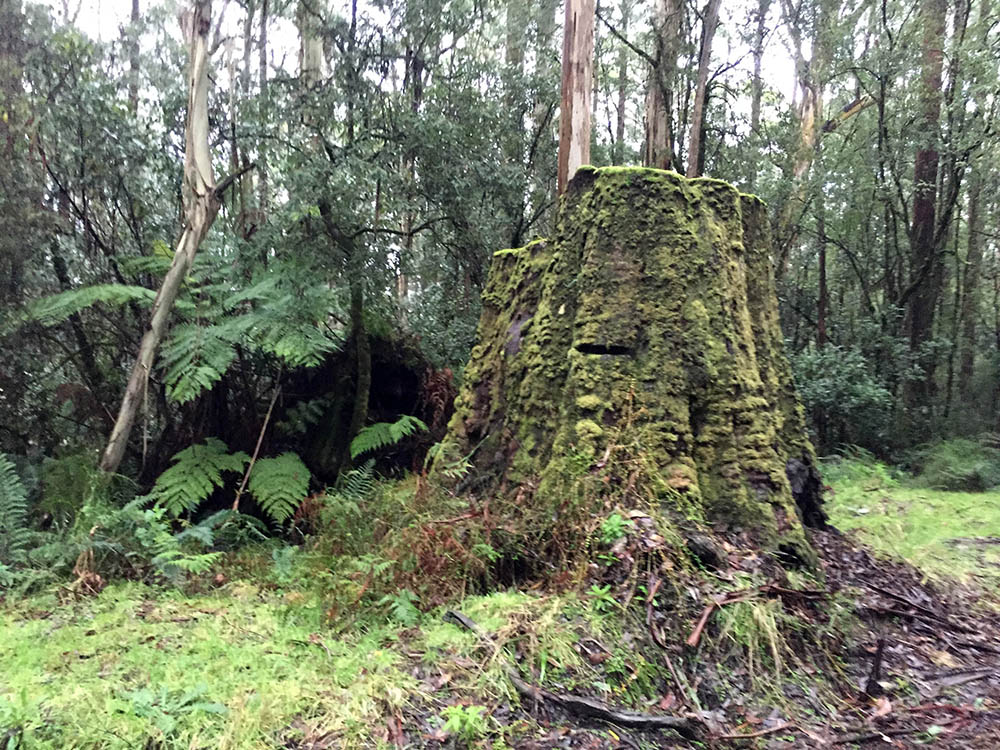
As you leave Forrest, keep an eye on the tree bases close to the road. Some are enormous. If you look carefully, you will see the notches cut into them by the lumberjacks who worked this forest a century ago. They would axe wedges into the base, wedge in standing boards, climb up, and then take the tree down with a two-handed saw. Standing on a plank, at height, in a forest of giants, bringing down something that had been growing since before the first Europeans reached America. Imagine the sound of a four-hundred-year-old tree falling.
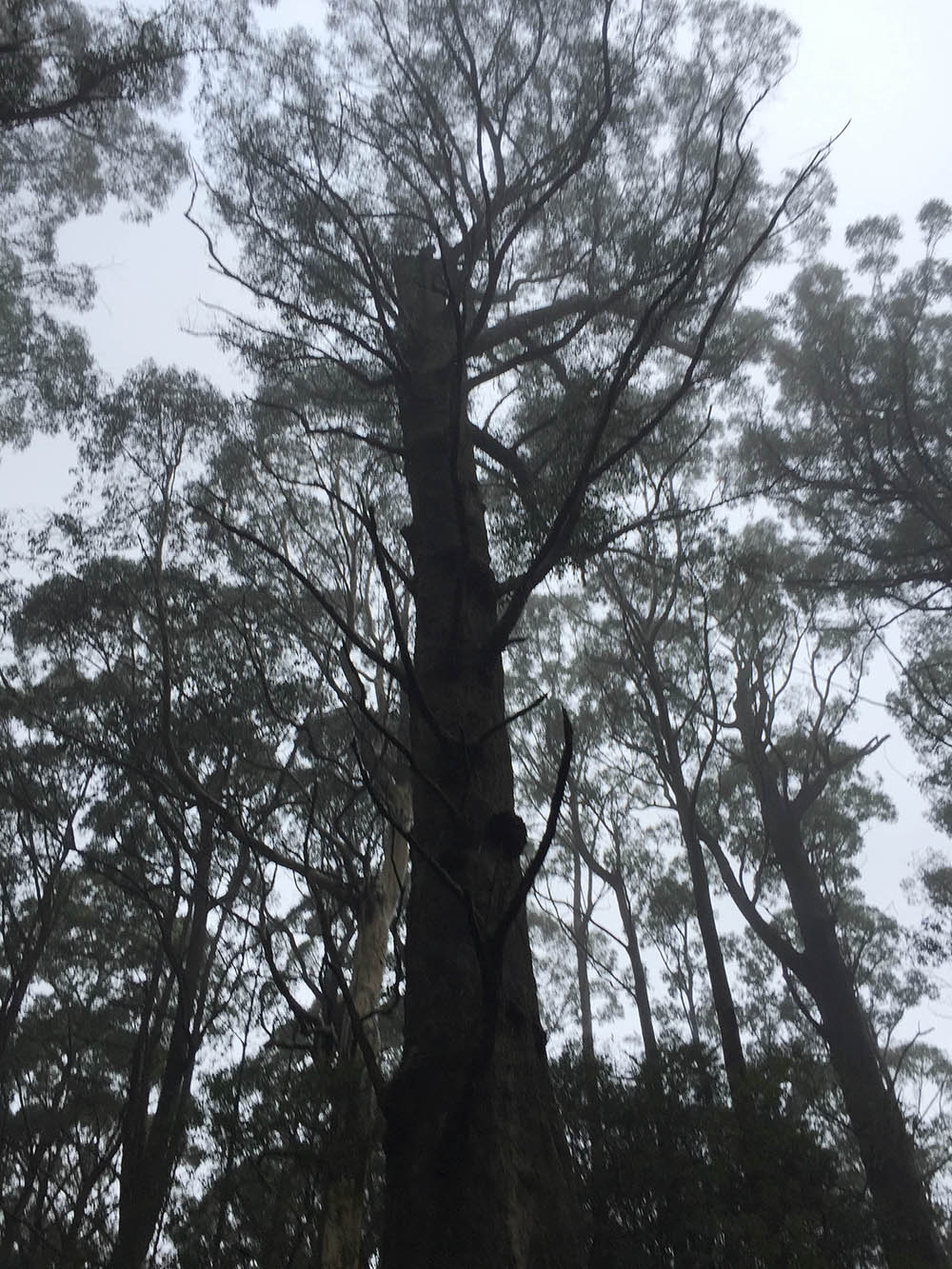
The Mountain Ash (Eucalyptus regnans) or Tasmanian oak, is one of the tallest trees on earth. The tallest living tree, a Californian redwood, stands at around 115 metres. There was a Mountain Ash felled in 1884, between Mirboo North and Thorpdale in Gippsland that was measured at 114.3 metres. The current living record holder is around 100 metres.
About fifteen to twenty minutes from Forrest, the survivors begin to appear. The ones the loggers left, or couldn't reach, or simply ran out of time for. Stately old gentlemen, with bases you could hide a car behind, and gnarled limbs that have been reaching for light since before Europeans arrived. Many of their tops were taken out by lightning over the centuries, they wear the damage like battle scared warriors.
They have a presence. I get the same feeling walking into a cathedral.
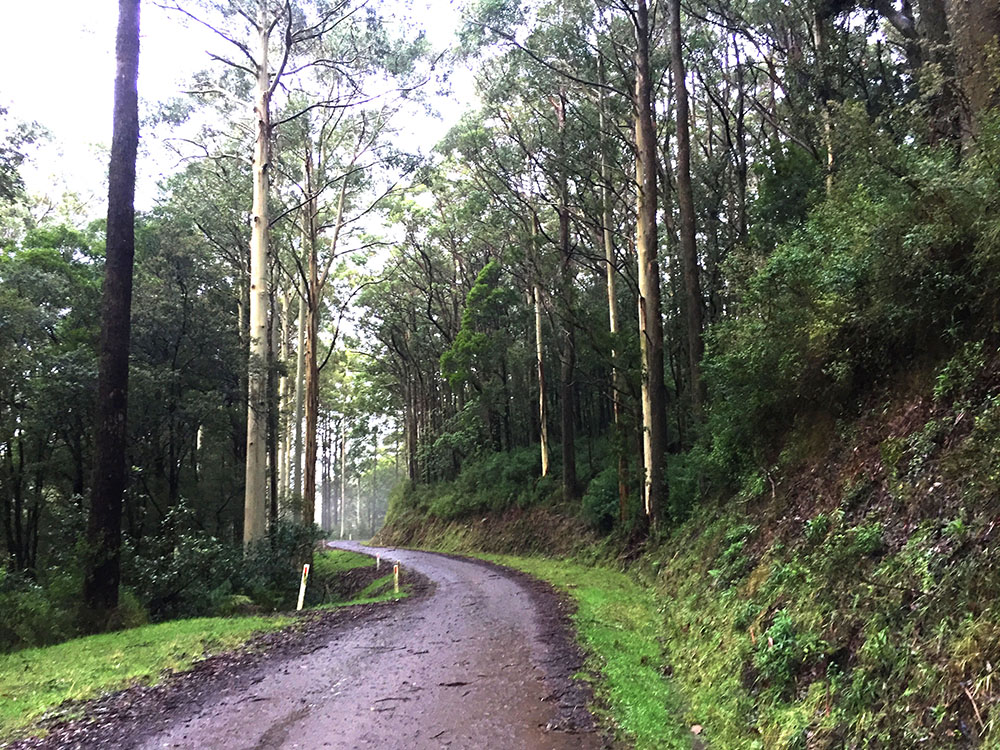
Wind after wind, the road cuts through this landscape; beautiful, primeval, and entirely indifferent to my schedule. Driving becomes a meditation. I didn't see another car. In many stretches the canopy meets seamlessly high above the road, which feels, from inside it, like a giant tunnel. In my VW van, I felt small. Not uncomfortably so. The kind of small that is actually a relief. The tree ferns grow in the shelter of the giants, graceful, ancient in their own right, drops of water pearling at the tips of the fronds.
Fleur rang."Where have you been?" "Sorry, I've been in Mikee land again."
In primary school, other kids would request a trip to McDonalds for their birthday. My birthday request would be a trip to Sherbrooke Forrest or similar. I never had to lie about being an outdoor guy.
A few practical notes before you go: The road from Forrest to Lorne can be driven in either direction, in any season. Summer or winter, it rewards the detour. Pre-load your GPS before you leave, there are long stretches without phone reception. If you do lose signal and need it, drive to the top of the next hill.
And when you stop, and you should stop, walk into the forest properly. Not just to the edge. Right in. Find a tree with a base wider than your armspan. Give it a hug.
Mike, June 2019 (Amateur photos taken on my old iPhone)
Updated May 2026
To Get There
Take Hennigan Crescent from Station Street in Forrest. There should be signs to Lake Elizabeth. Hennigan runs in to Kanglang Road, which will take you along the edge of the reservoir, keep going, when you pass the turnoff to Lake Elizabeth keep going straight. You will run in to Benwerrin Mt Sabine Road, turn left at the triangle in the middle of the intersection. Turn left on to Curtis Track, left on to Cumberland track which will take you to Lorne.
It sounds complicated, but in each case chose the route that points toward Lorne and you will stay on track. If you turn right anywhere you will end up on the Great Ocean Road, so it is not too treacherous.
Beware: don't leave the graded roads. There is a genuine chance of getting bogged, and help is not close at hand. If you end up in mud, don't go through it. The graded roads are well made, well cut and drained, stay on them and you'll be fine.